


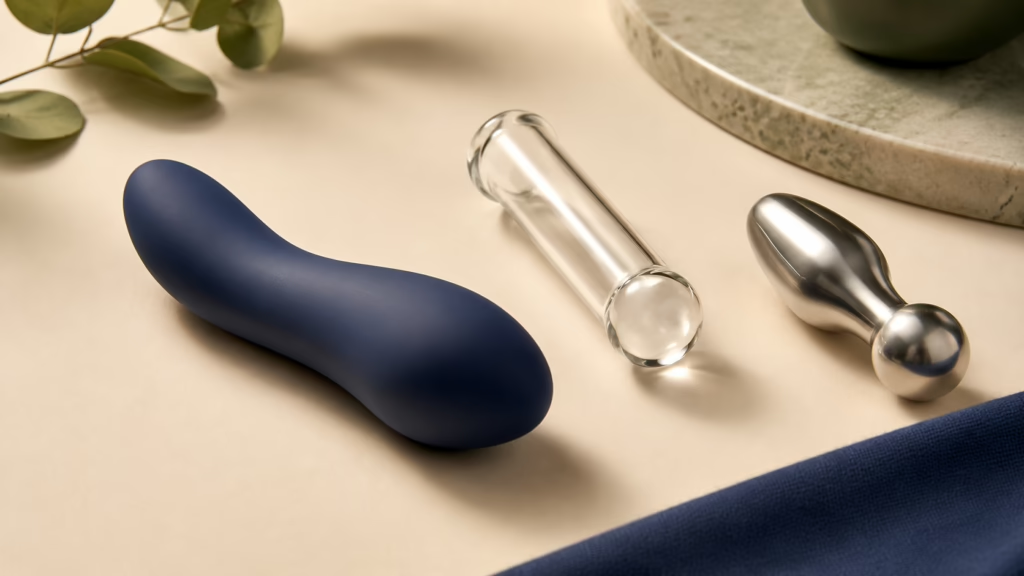
This week’s question comes up more than almost any other in our inbox, in one form or another: “I keep seeing ‘body-safe silicone’ on sex toys — is silicone actually safe, and how do I know what to avoid?” It’s a great question, and a more important one than most people realize. Here’s the evidence.
Let me start with the short answer, because it’s reassuring: yes, high-quality silicone is one of the safest materials a sex toy can be made from. It’s the gold standard for a reason. But — and this is the part worth understanding — “silicone” on a label doesn’t automatically mean what you’d hope, and the real safety question is bigger than any single material. So let’s actually unpack it.
Why material is the safety question that matters
Most people, when they think about whether a toy is “safe,” think about cleaning it. Cleaning matters, but it’s downstream of something more fundamental: what the thing is made of in the first place.
Here’s the uncomfortable bit of context. The sex toy industry is, in most countries, poorly regulated — products are frequently sold as “novelties,” a designation that sidesteps the safety standards applied to things meant for body contact. That means the burden of knowing what’s safe falls largely on the buyer. Which is annoying, but manageable once you know the small number of things that actually matter. Consumer and health organizations have noted that sex toys often fall outside standard product safety regulation, leaving material safety largely unregulated.
The single most important distinction isn’t between brands or price points. It’s between non-porous and porous materials.
Porous vs. non-porous: the distinction that actually counts
This is the concept that, once you understand it, makes you a much smarter buyer.
Non-porous materials have a sealed surface with no microscopic holes. That means they can be properly cleaned and sanitized — bacteria, fluids, and residue stay on the surface where soap and water can remove them. Safe for repeated use.
Porous materials are riddled with microscopic holes you can’t see. Those holes trap bacteria, fluids, and grime that cleaning simply cannot fully reach. Over time, a porous toy can harbor bacteria no amount of washing will remove — which is exactly the situation you don’t want for something used on sensitive tissue.
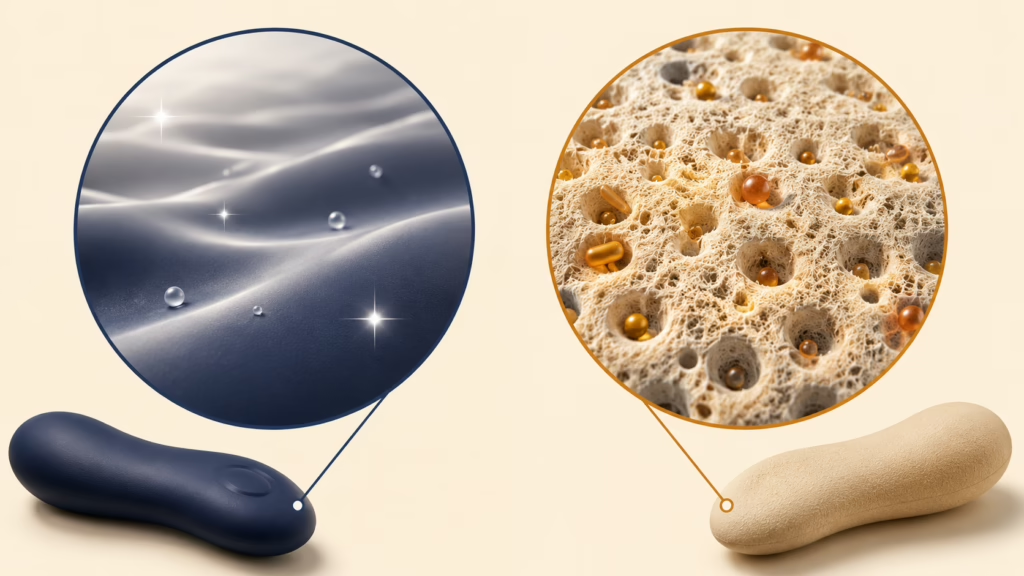
The body-safe, non-porous materials worth knowing are a short list: medical-grade silicone, borosilicate glass, stainless steel, and ABS plastic. These are the ones you want.
So is silicone safe? Yes — with one catch
Back to the original question. Medical-grade silicone is non-porous, body-safe, durable, and easy to clean. It’s genuinely excellent, which is why reputable makers use it and put it front and center on the label.
The catch is the word “medical-grade” — or at least “100% silicone.” Some cheaper products are labeled “silicone” but are actually silicone blends, cut with fillers that can reintroduce the porosity and chemical concerns you were trying to avoid. The label “silicone” alone isn’t a guarantee; “100% silicone” or “medical-grade silicone” from a reputable seller is what you’re looking for.
If you want a quick at-home check: high-quality silicone has a slightly matte, non-sticky feel and doesn’t have a strong chemical smell. A strong “plastic-y” or chemical odor is a red flag.
The materials to be cautious about
This is where the porous problem lives. The materials most associated with concerns are the soft, squishy, often cheap ones — frequently sold under names like jelly, PVC, TPR/TPE, and similar. The specific worry with some of these is phthalates — plasticizers used to make materials soft and flexible, some of which have been flagged in research as potential endocrine disruptors. Research on phthalates has raised concerns about their effects as potential endocrine-disrupting chemicals, prompting restrictions in various consumer products.
I want to be measured here, because this is where fear-mongering tends to take over. The point isn’t that one use of a cheap toy will harm you — the evidence doesn’t support panic. The point is that for something used repeatedly, on sensitive, absorbent tissue, choosing a non-porous, body-safe material is a sensible, low-effort way to remove the question entirely. You don’t need to be afraid; you just need to be informed.
If a toy is made of a porous material and you already own it, the standard harm-reduction advice is to use it with a condom over it, and don’t share it. But the better move going forward is simply to buy non-porous.
A quick, practical buying checklist
Pulling it together into something you can actually use:
- Look for “medical-grade silicone” or “100% silicone” — from a seller who tells you the material plainly. Our beginner’s guide covers how to read for materials when choosing a first toy.
- Be wary of suspiciously cheap, soft, jelly-like toys — softness and rock-bottom price are the most common red flags for porous materials.
- Trust your nose — strong chemical smell is a warning sign.
- Buy from sellers who name their materials — transparency is itself a quality signal. Vagueness about materials usually means there’s a reason for the vagueness.
- Match your lube to your material — water-based lube with silicone toys, since silicone lube can degrade silicone surfaces.

Air-Pulse Suction Vibrator
Why it fits: Made from medical-grade silicone and fully waterproof — exactly the non-porous, body-safe spec this article is about. A clean example of doing materials right.
The bottom line
So — are silicone sex toys safe? Yes, genuinely, when it’s quality silicone from a maker who’s transparent about it. Silicone isn’t the thing to worry about; it’s the answer to the worry. The real skill is the porous-versus-non-porous distinction, and once you’ve got that, you can evaluate any toy in about ten seconds.
Material is the one corner you shouldn’t cut. Everything else about a toy is preference. This part is just safety — and it’s refreshingly easy to get right.

Q: Are silicone sex toys safe?
A: Yes — medical-grade or 100% silicone is non-porous, body-safe, durable, and easy to clean. It’s the gold standard. Just confirm it’s genuine silicone from a transparent seller, not a cheap blend.
Q: What sex toy materials should I avoid?
A: Be cautious with soft, cheap, jelly-like materials such as jelly, PVC, and some TPR/TPE, which can be porous and may contain phthalates. Choose non-porous materials instead.
Q: What’s the difference between porous and non-porous toys?
A: Non-porous materials (silicone, glass, steel, ABS) have sealed surfaces that can be properly cleaned. Porous materials have microscopic holes that trap bacteria cleaning can’t fully remove.
Q: How can I tell if silicone is good quality?
A: Quality silicone feels slightly matte and non-sticky with no strong chemical smell. Look for “medical-grade” or “100% silicone” labels from sellers who state the material clearly.