



There’s a strange thing that happens when you tell people you analyze sex data for a living. They lean in. Then, almost without exception, they ask some version of the same question: “So… is what we’re doing normal?”
I’ve come to think that question is the whole reason this kind of work matters. Most of us carry around a private, anxious estimate of how everyone else’s intimate lives are going — usually assembled from movies, a few overheard conversations, and whatever the algorithm decided to show us last week. It’s almost always wrong. Usually it’s wrong in the direction that makes us feel worse.
So once a year I do something unglamorous but useful: I gather the most credible public data I can find on how Americans are actually doing — in bed, in their relationships, in the quiet space between the two — and I try to say plainly what it shows. Not the clickbait version. The real version, with its uncomfortable nuances left in.
This is the 2026 edition. A few things in here surprised me. A couple of them might recalibrate the private estimate you’ve been carrying around.
A note before we start, because it matters: I’m pulling from large, published datasets — national surveys, peer-reviewed studies, long-running research programs. I’ll point to sources as we go. No single number is gospel; survey methods differ, people misremember and misreport, and “average” is doing a lot of quiet work in every figure below. Read these as a map, not a measuring tape.
How often are people actually having sex?
Let’s start with the question everyone wants answered and nobody wants to ask out loud.
The short version: less than a generation ago, and less than most people assume. American adults report having sex roughly 54 times a year on average — about once a week — but that average has been drifting downward for years. The decline isn’t a blip; it shows up across age groups, and it predates the pandemic, though the pandemic didn’t help.
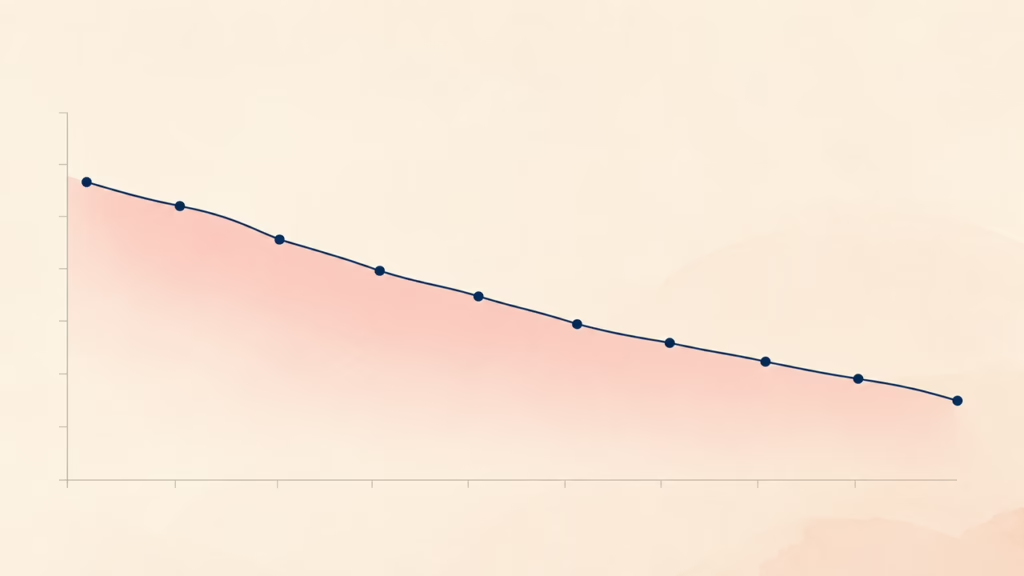
What’s driving it is the genuinely interesting part, and it resists a tidy headline. It isn’t simply that people are unhappy. Some of the decline tracks with real, arguably healthy changes: more people are single for longer, partnership is happening later, and — this is the one I’d underline — the rise of what researchers sometimes call the “sex recession” overlaps heavily with younger adults who report being perfectly content with less. The number going down is not, by itself, a problem to be solved. Frequency was never the right scoreboard.
Which brings us to the number that actually correlates with how people feel.
Frequency is the wrong metric. Here’s the right one.
If you take only one thing from this report, take this: how often couples have sex is a weak predictor of how satisfied they are. Quality, responsiveness, and feeling desired are strong ones.
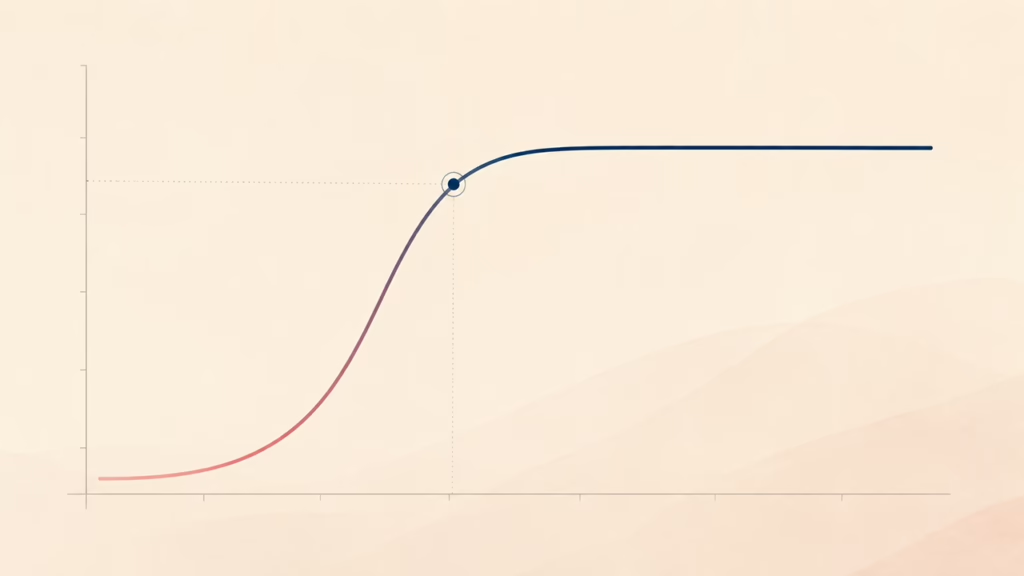
The most-cited finding here comes out of work showing that, for couples in established relationships, well-being rises with sexual frequency only up to about once a week — and then flattens out. Past that point, having more sex doesn’t make couples reliably happier. The couple having sex four times a week is not, on average, happier than the couple having it once. That finding has held up well enough that I’d treat it as one of the more solid things in this entire report.
I want to sit on this for a second, because it runs directly against the cultural script. We’re sold a model where more is the goal and any decline is decay. The data says something gentler and more human: there’s a “good enough” threshold, it’s lower than most people fear, and what happens around the sex — the affection, the attention, the sense of being wanted — is doing most of the emotional work.
The pleasure gap is real, and it’s specific
Now the uncomfortable section.
When researchers ask heterosexual men and women in the same study how reliably they reach orgasm during partnered sex, the gap is large and stubborn. In broad terms, men report orgasm in the high-80s to mid-90s percent of encounters; women report dramatically less — often in the 50s to 60s percent range in similar contexts. This is what gets called the “orgasm gap,” and it’s one of the most replicated findings in the field.
Here’s the part the headline usually drops: the gap is not about female anatomy being mysterious or difficult. The same body of research shows the gap shrinks sharply in two situations — when women are in relationships where they feel comfortable communicating, and when sex reliably includes clitoral stimulation rather than treating intercourse alone as the main event. Women who masturbate report no such “difficulty” reaching orgasm alone, which tells you the issue was never the equipment.
In other words, the gap is mostly a script problem, not a biology problem. That’s actually good news, because scripts can be rewritten. Anatomy is harder to negotiate with.
What people say is getting in the way
When you ask people what actually limits their sex lives, the answers are almost touchingly mundane. Across surveys, the recurring culprits aren’t exotic. They’re stress, exhaustion, lack of time, and the slow erosion of novelty in long relationships.
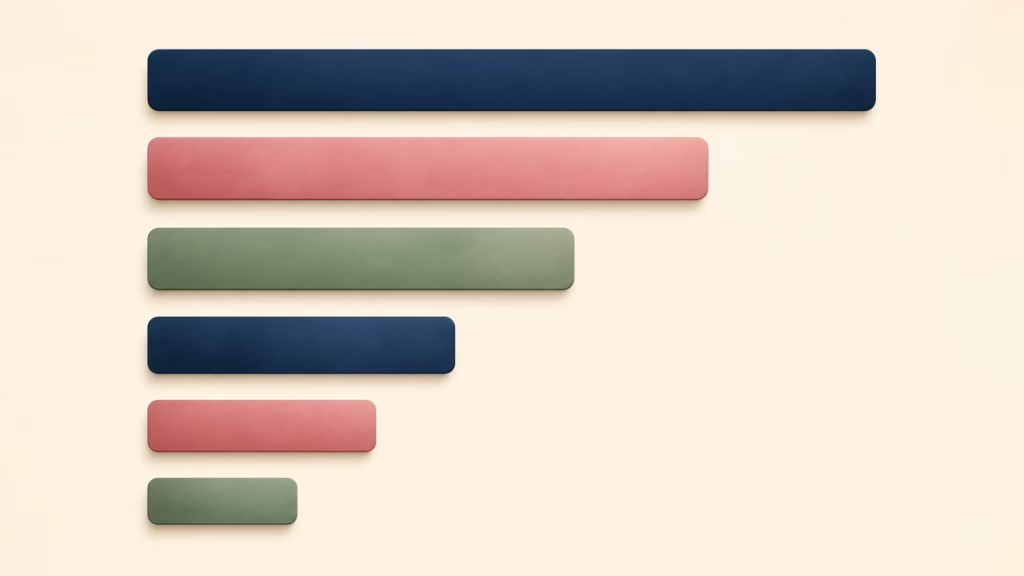
I find this clarifying. The thing standing between most couples and a better intimate life is rarely a technique they haven’t discovered. It’s a Tuesday. It’s two tired people, a long to-do list, and a stress response that does a very effective job of switching desire off. The research on stress and libido is consistent on this point — chronically elevated stress suppresses sexual desire through real physiological pathways, not just “being in a bad mood.”
The practical implication is almost annoyingly unsexy: protecting your sex life looks a lot like protecting your sleep, your calendar, and your capacity to actually be present. The work happens long before the bedroom.
Toys went mainstream, quietly
One genuine shift over the last decade — and one of the few trend lines moving up — is the normalization of sexual wellness products. A large and growing share of American adults report having used a vibrator or similar product, with usage common across genders and relationship statuses rather than confined to any stereotype.
What changed isn’t just the numbers; it’s the framing. These products have migrated out of the “novelty” category and into something closer to general wellness — discussed in mainstream outlets, designed like consumer electronics, recommended by clinicians for specific issues. The data showing they’re used most often to enhance partnered sex, not replace it, undercuts the old anxious assumption that toys are a threat to a relationship. If anything, the couples integrating them tend to report this as part of an active, communicative sex life, not a substitute for one.
The generational picture is more complicated than “kids these days”
The lazy take is that younger generations are either having wild amounts of sex or none at all, depending on which moral panic you prefer. The data supports neither cartoon.
Younger adults do report lower partnered sexual frequency than previous generations did at the same age — that’s the “sex recession” again — but they also report more openness about sexual identity, more communication, and less shame around topics older cohorts avoided. It’s not that one generation is “doing it right.” It’s that the trade-offs have shifted. Less frequency, arguably more literacy.
Whether that nets out as progress depends on what you think sex is for. If the metric is volume, the trend looks like decline. If the metric is consent, communication, and the freedom to opt out without stigma, parts of it look like maturation.
So — are you normal?
Back to the question I started with.
The honest answer the data gives is that “normal” covers an enormous range, and most of the anxiety people carry is manufactured by bad comparison. Once a week is common and, past a point, plenty. A pleasure gap exists but isn’t destiny. The biggest obstacles are ordinary life, not personal defect. And the cultural scripts many of us absorbed — more is better, intercourse is the main event, desire should be automatic — are, on inspection, just not well supported by the evidence.
If there’s a thesis hiding in this year’s numbers, it’s the one I keep coming back to: the thing that usually gets in the way of a good intimate life isn’t the body, and it’s almost never frequency. It’s the noise around it — the stress, the assumptions, the silence, the scripts nobody chose but everyone inherited.
That’s a more hopeful finding than it sounds. Bodies are hard to change. Noise, you can turn down.
I’ll run these numbers again next year. Send me the studies I missed.
— T.
Dr. Theo Brennan is AmourFuel’s Research Editor. He holds a PhD in Public Health from Johns Hopkins University, where his research focused on sexual health epidemiology.

Q: How often does the average American couple have sex?
A: Roughly once a week on average, though this has been declining for years and varies widely by age and relationship stage.
Q: Is the orgasm gap between men and women real?
A: Yes — it’s one of the most replicated findings in sex research. But it narrows sharply with communication and clitoral stimulation, indicating it’s driven by sexual scripts rather than anatomy.
Q: Why is sex frequency declining?
A: Multiple factors: later partnership, more people single longer, and rising stress and exhaustion. Notably, much of the decline isn’t linked to dissatisfaction.
A note on sources and method
Every figure above is drawn from published, public data — national probability surveys, peer-reviewed studies, and long-running research programs. Where I’ve given a number, I’ve pointed to the body of work it comes from. Averages conceal variation; self-reported sexual data carries known biases; and “American adults” is a vast, non-uniform group. Treat this as an informed map of the landscape, not a precise measurement of any one life — least of all yours.