


Introduction
For generations, masturbation has been shrouded in misconception, guilt, and outdated beliefs. Despite being one of the most natural and common human behaviors, it remains a topic whispered about rather than openly discussed. Perhaps the most persistent question people ask is: Does masturbation impact your sex life?
The short answer is nuanced. While masturbation is a healthy, normal part of human sexuality, certain myths have created unnecessary anxiety about its effects on partnered intimacy. In this comprehensive guide, we’ll explore the science, debunk common myths, and help you understand the real relationship between self-pleasure and your sex life.

Understanding Masturbation: The Basics
Masturbation is the self-stimulation of one’s genitals for sexual pleasure. It’s a completely normal behavior practiced by people of all ages, genders, and relationship statuses. According to research, approximately 74% of men and 48% of women report masturbating in the past year, with many doing so even while in committed relationships.
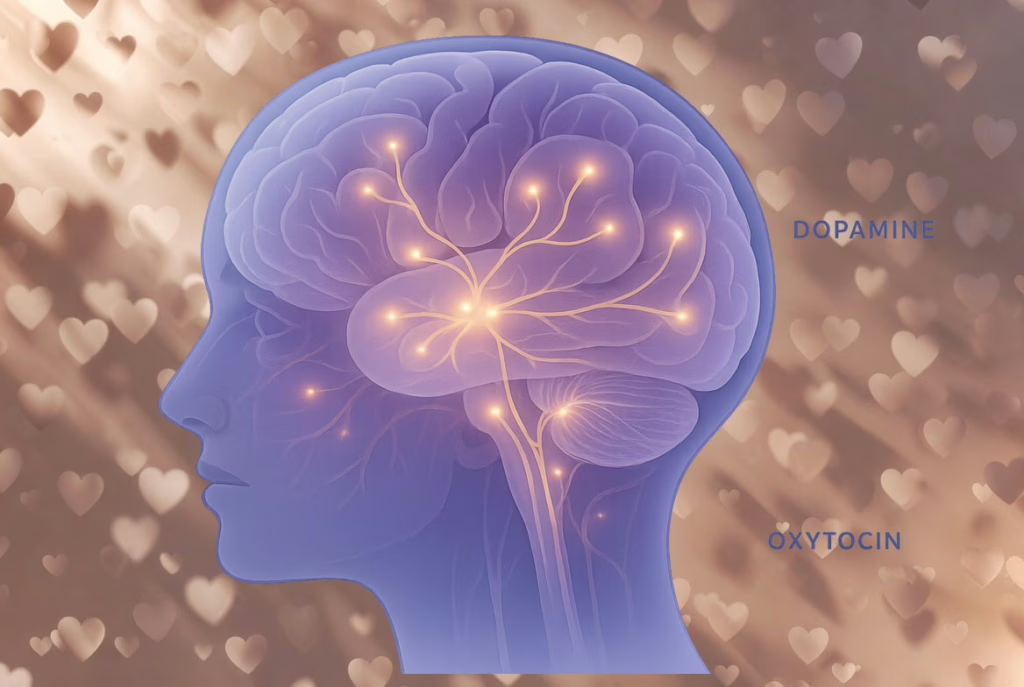
From a physiological standpoint, masturbation triggers the release of endorphins, dopamine, and oxytocin—the same feel-good chemicals released during partnered sex. It can reduce stress, improve sleep quality, and help individuals understand their own sexual responses and preferences.
The Historical Context of Masturbation Myths
Many of today’s masturbation myths stem from Victorian-era medicine and religious teachings that viewed any non-procreative sexuality as immoral or medically harmful. These outdated beliefs claimed masturbation caused everything from blindness to insanity, none of which have any scientific basis.
Understanding this historical context helps explain why so many misconceptions persist today, despite overwhelming scientific evidence to the contrary.
Myth #1: Masturbation Decreases Your Sex Drive
The Truth: Masturbation does not inherently decrease libido or interest in partnered sex. In fact, research suggests the opposite may be true for many people.
Studies have found that individuals who masturbate regularly often report higher levels of sexual desire overall. This makes sense when you consider that sexual desire functions somewhat like a muscle—regular sexual activity, whether solo or partnered, tends to maintain and even increase libido rather than deplete it.
The Real Factors Affecting Libido
Several legitimate factors can affect your sex drive, including:
- Stress and mental health: Anxiety, depression, and chronic stress are major libido suppressors
- Hormonal changes: Fluctuations in testosterone, estrogen, and other hormones naturally affect desire
- Medications: Many common medications list decreased libido as a side effect
- Relationship dynamics: Communication issues, unresolved conflict, or emotional disconnection impact intimacy
- Sleep quality: Poor sleep directly affects hormone production and energy levels
If you’re experiencing decreased interest in partnered sex, it’s worth examining these factors rather than assuming masturbation is the culprit.
When Masturbation Might Signal an Issue
The exception occurs when someone uses masturbation as an avoidance mechanism for deeper relationship or personal issues. If you find yourself consistently choosing masturbation over partnered intimacy despite your partner’s desires, this might indicate:
- Unaddressed relationship conflicts
- Performance anxiety during partnered sex
- Different libido levels between partners
- Using masturbation to cope with stress rather than addressing underlying issues
In these cases, the masturbation itself isn’t the problem—it’s a symptom of something else that deserves attention.

Myth #2: Masturbation Causes Erectile Dysfunction or Orgasm Problems
The Truth: Masturbation does not cause erectile dysfunction (ED) or prevent you from orgasming with a partner.
Erectile dysfunction has many causes, including cardiovascular health, diabetes, hormonal imbalances, psychological factors, and certain medications. There is no credible scientific evidence linking masturbation to ED.
Understanding “Death Grip Syndrome”
One concern that does have some merit is the concept sometimes called “death grip syndrome”—when someone becomes so accustomed to a very specific, intense pressure or technique during masturbation that partnered sex feels less stimulating by comparison.
This is not permanent damage and can be addressed by:
- Varying masturbation techniques and grip pressure
- Using lubricants to create different sensations
- Taking breaks from masturbation to reset sensitivity
- Exploring different forms of touch and stimulation
- Communicating with your partner about preferences
The Refractory Period Reality
Men do experience a refractory period after orgasm—a temporary time when achieving another erection is difficult or impossible. This period varies widely among individuals and increases with age. If someone masturbates shortly before planned partnered intimacy, they may need more time to become aroused again. This is simple physiology, not dysfunction.
The solution is straightforward timing and communication, not eliminating masturbation entirely.

Myth #3: Masturbation Makes You Less Interested in Your Partner
The Truth: Masturbation and partnered sex serve different emotional and physical needs. One does not replace the other for most people.
Partnered sex involves emotional connection, vulnerability, communication, and mutual pleasure. Masturbation offers convenience, stress relief, and personal exploration without the need to consider another person’s needs or schedule.
Think of it this way: enjoying a quiet meal alone doesn’t mean you no longer value dining with loved ones. Both experiences have their place and serve different purposes.
What the Research Shows
Studies examining sexual satisfaction in relationships have found no negative correlation between masturbation frequency and relationship satisfaction. Some research even suggests that couples who are comfortable with masturbation—both solo and mutual—report higher levels of sexual satisfaction overall.
A 2015 study published in the Archives of Sexual Behavior found that among partnered individuals, those who masturbated more frequently also engaged in more frequent partnered sexual activity. This challenges the zero-sum assumption that masturbation “uses up” sexual energy that would otherwise go to a partner.
When to Evaluate Your Patterns
That said, honest self-reflection is valuable. Ask yourself:
- Am I avoiding intimacy with my partner because of unresolved issues?
- Does my partner feel rejected or hurt by my solo sexual activity?
- Am I using masturbation to avoid addressing sexual concerns with my partner?
- Have we discussed our individual needs and found a balance that works for both of us?
Healthy relationships thrive on open communication about all aspects of intimacy, including masturbation.

Myth #4: Frequent Masturbation Means Your Relationship Is in Trouble
The Truth: Masturbation frequency alone is not an indicator of relationship health.
People masturbate for many reasons unrelated to relationship satisfaction:
- To relieve stress or help with sleep
- When partner availability doesn’t match libido timing
- To explore personal fantasies or preferences
- For physical health benefits
- Simply because it feels good and is convenient
A person in a fulfilling relationship might still masturbate several times a week, while someone in an unsatisfying relationship might rarely do so. The behavior itself doesn’t tell the whole story.
The Importance of Mismatched Libidos
One of the most common relationship challenges is mismatched sexual desires. When one partner has a significantly higher libido than the other, masturbation can actually be a healthy solution that removes pressure from the lower-libido partner while allowing the higher-libido partner to meet their needs.
This arrangement requires open communication and mutual understanding, but it can strengthen relationships by acknowledging that one person cannot and should not be solely responsible for meeting all of another’s sexual needs.

Myth #5: You Should Stop Masturbating When You’re in a Relationship
The Truth: Being in a relationship does not mean you should stop masturbating unless both partners have mutually agreed to this boundary.
Your body belongs to you, and maintaining a healthy relationship with your own sexuality is part of overall wellness. Most sex therapists and relationship counselors agree that masturbation can coexist healthily with partnered intimacy.
The Benefits of Solo Sexuality in Relationships
Continuing to masturbate while in a relationship offers several benefits:
- Self-knowledge: Understanding your own body helps you communicate better with your partner about what feels good
- Autonomy: Maintaining sexual agency reinforces that you’re complete individuals who choose to share intimacy
- Pressure relief: Reduces the pressure on partners to be available for sex at all times
- Sexual confidence: Regular orgasms support hormonal balance and sexual confidence
- Exploration: Allows for private exploration of fantasies or curiosities
Setting Healthy Boundaries Together
What matters more than whether you masturbate is how you and your partner communicate about it. Healthy relationships involve discussions about:
- Whether you’re comfortable knowing about each other’s masturbation habits
- If there are any circumstances where it feels hurtful (timing, frequency, etc.)
- How to balance solo and partnered sexuality
- Whether mutual masturbation or incorporating it into partnered play interests you both
These conversations should be judgment-free and focused on understanding each other’s needs and boundaries.

When Masturbation Might Actually Be Affecting Your Sex Life
While the myths we’ve debunked are not grounded in reality, there are legitimate scenarios where masturbation patterns might impact your partnered sex life:
1. Compulsive Behavior
If masturbation becomes compulsive—interfering with daily responsibilities, relationships, or causing distress—this may indicate problematic sexual behavior or be a coping mechanism for underlying issues like anxiety or depression.
Signs might include:
- Masturbating even when you don’t want to
- Feeling unable to stop despite negative consequences
- Using it to avoid dealing with difficult emotions
- Experiencing shame or distress about the behavior
2. Unrealistic Expectations from Pornography
When masturbation is frequently paired with pornography, some individuals develop expectations that don’t align with real partnered sex. This can include:
- Unrealistic body standards
- Assumptions about sexual performance or response
- Scripted scenarios that don’t reflect actual intimacy
- Reduced satisfaction with real partners
The solution isn’t necessarily eliminating masturbation, but rather examining your pornography use and ensuring it’s not shaping unrealistic expectations.
3. Using It to Avoid Intimacy
If you consistently choose masturbation over available partnered intimacy as a way to avoid vulnerability, conflict, or connection, this pattern deserves attention. Masturbation becomes problematic when it’s primarily an avoidance strategy rather than a healthy expression of sexuality.
4. Physical Conditioning
As mentioned earlier, very specific, intense stimulation patterns can make it temporarily harder to reach orgasm during partnered sex. This is easily addressed by varying your technique and is not permanent damage.

The Positive Ways Masturbation Can Enhance Your Sex Life
Now for the good news: masturbation can actually improve your partnered sex life in several ways.
Better Body Awareness
Understanding what feels good to you makes it easier to guide your partner. People who regularly masturbate tend to have better awareness of their sexual response, erogenous zones, and preferences—all valuable knowledge for partnered intimacy.
Improved Sexual Function
Regular orgasms support healthy sexual function. For people with penises, this means maintaining erectile function. For people with vaginas, it means maintaining pelvic floor health and natural lubrication. The old saying “use it or lose it” has some truth when it comes to sexual function.
Stress Management
The stress-relieving benefits of masturbation can improve your overall mood and energy levels, making you more present and engaged during partnered intimacy. When you’re less stressed, you’re more likely to initiate and enjoy sex with your partner.
Exploration and Communication
Masturbation provides a safe space to explore what you find arousing without performance pressure. This self-knowledge becomes valuable information you can share with your partner, enhancing mutual pleasure.
Maintaining Desire During Dry Spells
Life happens—illness, travel, pregnancy, stress, and countless other factors can temporarily reduce partnered sexual activity. Masturbation helps maintain your sexual connection to your body during these times, making it easier to reconnect with your partner when circumstances improve.
How to Talk to Your Partner About Masturbation
Open communication is the cornerstone of sexual compatibility. Here’s how to approach this potentially sensitive conversation:
Choose the Right Time
Don’t bring up masturbation during or immediately after sex, or during a conflict. Choose a neutral time when you’re both relaxed and have privacy for an uninterrupted conversation.
Start with Curiosity, Not Accusation
Instead of “Why do you masturbate when we’re together?” try “I’d like to talk about how we both think about masturbation in our relationship.”
Share Your Own Experience First
Leading with vulnerability encourages openness. “I sometimes masturbate even though we have a healthy sex life, and I wanted to talk about whether that’s something we’re both comfortable with.”
Listen Without Judgment
Your partner’s relationship with their sexuality is personal. Even if their perspective differs from yours, listen to understand rather than to judge or change them.
Focus on Needs, Not Rules
Rather than creating rules about masturbation, discuss underlying needs: “I need to feel desired by you” or “I need autonomy over my body” or “I need reassurance that our sex life is satisfying.”
Consider Professional Help
If conversations about sexuality consistently lead to conflict or hurt feelings, a sex therapist or couples counselor can provide valuable guidance. There’s no shame in seeking professional support for sexual communication.

Creating a Healthy Balance
The key to integrating masturbation into a healthy relationship is balance and communication. Here are practical strategies:
1. Maintain Perspective
Remember that both solo and partnered sexuality have value. Neither is inherently superior or more legitimate than the other.
2. Prioritize Connection
If you’re in a relationship where both partners want more intimacy, prioritize making time for connection. This might mean consciously choosing partnered sex over masturbation sometimes, or vice versa.
3. Be Honest About Mismatched Libidos
If libido differences are creating tension, acknowledge this openly and work together on solutions that respect both partners’ needs.
4. Vary Your Patterns
To avoid physical conditioning that might affect partnered sex, intentionally vary your masturbation techniques, pressure, speed, and positions.
5. Check In Regularly
Sexual needs and patterns change over time. Regular check-ins about sexual satisfaction—including masturbation—help you stay connected as you both evolve.
6. Separate Shame from Reality
If you feel shame about masturbation, explore where those feelings come from. Often they’re rooted in outdated messages that don’t serve your wellbeing.
The Bottom Line: Masturbation and Your Sex Life
The relationship between masturbation and partnered sex is far more nuanced than the myths suggest. For the vast majority of people, masturbation does not negatively impact their sex life. Instead, it’s a normal, healthy part of human sexuality that can coexist harmoniously with fulfilling partnered intimacy.
The real factors affecting your sex life are:
- Communication quality with your partner
- Overall relationship satisfaction
- Physical and mental health
- Stress levels and life circumstances
- Sexual compatibility and willingness to adapt
- Emotional intimacy and trust
If you’re concerned that masturbation is affecting your relationship or sexual function, the solution isn’t necessarily to stop masturbating. Instead, examine the underlying patterns: Are you avoiding intimacy? Is pornography creating unrealistic expectations? Have you and your partner discussed your individual needs?
Remember that sexual wellness is holistic. It encompasses physical health, emotional wellbeing, relationship dynamics, and self-acceptance. Masturbation is simply one piece of this larger puzzle—neither villain nor savior, but a normal human behavior that most people engage in throughout their lives.
By moving beyond myths and embracing open, honest communication, you can create a sexual relationship with yourself and your partner that’s satisfying, sustainable, and shame-free.
When to Seek Professional Help
Consider consulting a sex therapist or healthcare provider if:
- Masturbation feels compulsive or uncontrollable
- You’re experiencing sexual dysfunction that concerns you
- You and your partner have persistent conflict about sexual needs
- You feel overwhelming shame or distress about normal sexual behaviors
- Your sexual patterns are significantly impacting your quality of life or relationships
Professional support can provide personalized guidance that general articles cannot. Your sexual wellbeing matters, and seeking help is a sign of strength, not weakness.
Final Thoughts
Understanding the truth about masturbation frees you from unnecessary guilt and anxiety. Your sexuality—whether solo or partnered—deserves to be approached with curiosity, kindness, and honesty rather than shame or fear.
By debunking these persistent myths, we hope you feel empowered to make informed decisions about your own body and to have open conversations with partners about this natural aspect of human sexuality. The path to sexual fulfillment isn’t about following rigid rules, but about understanding yourself, communicating openly, and creating a sexual life that feels authentic and satisfying to you.
Additional Resources
For more information about sexual health and relationships:
- The American Sexual Health Association (ashasexualhealth.org)
- The American Association of Sexuality Educators, Counselors and Therapists (aasect.org)
- Planned Parenthood’s sexual health resources
- Books: “Come As You Are” by Emily Nagoski, “Mating in Captivity” by Esther Perel
Remember: you deserve a fulfilling sexual life free from shame and misinformation.